Showing posts with label artist. Show all posts

Thursday, May 1, 2014

Marian Kraus - Dylan Pieper

Marian Kraus is a Chicago based photographer who's main focus is photographing interior and exterior architecture, though he photographs other subjects such as photography for interior design and fine art photography. He is currently working on a project involving mechanical and industrial equipment. Since that is a subject I am currently doing, that's what drew me to him in the first place.

Here is a link to his gallery.

http://mariankraus.photoshelter.com/gallery/Mechanical-Industrial/G0000y7wF5COiqiA


Tutorial on How to Approach Strangers By Sara Moore

Hey everyone!!! This is a tutorial (kind of) that is great. The video below covers a man named Brandon Stanton who had started a photo project called Humans of New York.  He has set out to photograph 10,000 New Yorkers and plot their photos on a map.  Later on, he started to interview his subjects.  Along side their photo he puts a very intimate quote and short stories from their lives.  The video is a tutorial on great tips on how to approach a complete stranger.  I hope you enjoy the demonstration on how he approaches people on the street!

https://www.youtube.com/watch?v=KPxzlGPrM3A&list=PLHKVjBSDqMB7eyU1Se_X4cUI56oYYQWmA


Here is a link to his Facebook page and check out some of his work:


https://www.facebook.com/humansofnewyork?ref=br_tf


Tuesday, April 29, 2014

Henrik Knudsen- Buyun Wang

Henrik was born in Denmark and studied computer science and mathematics before taking up photography. He now divides his professional time between London and New York.
Henrik's work often has a narrative content and is increasingly influenced by film and cinema.

When he is not working on editorial and advertising commissions, Henrik travels widely, working on personal photographic projects. Recent projects have taken him all over Europe and back to his native Denmark.


I like his work because it shows strong emotion about himself.
Here you can find more about he:http://www.henrikknudsen.com/projects/

Tuesday, April 22, 2014

Thomas Kettner-Buyun Wang

Thomas Kettner - it´s a symbiosis between technical craftmanship and artistic creativity
that features Thomas Kettner to be an exceptional photographer. His deep aesthetic sensation, his permanent innovative ideas, originated mostly in more than adventurous missions, enliven his pictures, to make them distinctively unmistakeable and give them their very special esprit.
Raised in South Africa, now living back in Germany, he always kept his love for the black continent. It always draws him back for his photoshoots,  even though he made his name on all continents purviewing fashion, beauty, people, journalism and experimental photography.
Beyond that he also dedicates himself to be assigned as a honorary member of the board in the BFF, most likely the most designated photographers confederation of Europe in Germany, as well as a documentary photographer for the doctors of the third world.

I like his work because it is so unique.


Here is his website:http://www.thomaskettner.com/#/socialprojects/1014

Tuesday, April 15, 2014

Dorothea Lange's Migrant Mother by Jimmie


Did you know, the woman in this iconic Dust Bowel era photo was born in a teepee?  A Cherokee from Oklahoma, she would have ten children and end up in California.

Check out the story behind this photo at
http://www.pbs.org/wgbh/roadshow/fts/kansascity_201307F03.html

You can download a high res version of this image and others of the "Migrant Mother" at the Library of Congress site:
http://www.loc.gov/rr/print/list/128_migm.html

Anne W. Brigman - Jon Bolli


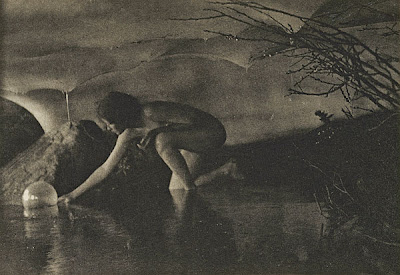
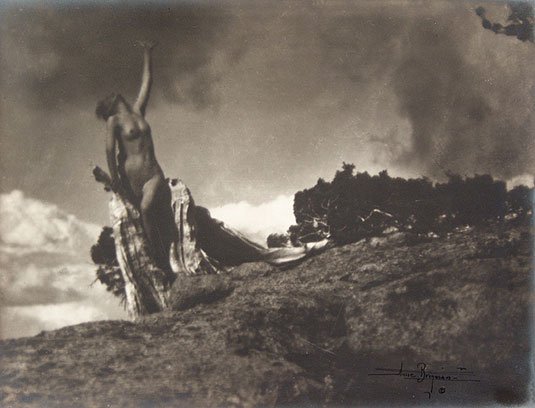
Born in Hawaii, Anne Brigman moved to California when she was sixteen years old. Trained as a painter, she turned to photography in 1902. "[S]lim, hearty, unaffected women of early maturity living a hardy out-of-door life in high boots and jeans, toughened to wind and sun" were Brigman's favored subjects, and she photographed them nude in the landscape of the Sierra Nevada mountains of Northern California.

Brigman was one of two original California members of the art photography group the Photo-Secession, founded by Alfred Stieglitz, and she was the only Western photographer to be made a Fellow of the group. Three issues of Camera Work featured her photographs, and the British Linked Ring society of photographers elected her a member. Around 1929 she moved to Long Beach in Southern California, where she continued to photograph, focusing on a series of sand erosions. A year before her death in Eagle Rock, near Los Angeles, in 1950, she published a book of her poems and photographs titled Songs of a Pagan. 

http://prod-images.exhibit-e.com/www_josephbellows_com/4edf63c7.jpg 

https://blogger.googleusercontent.com/img/b/R29vZ2xl/AVvXsEi2MiggVwcfYBnp2tzR-xzeQeI4xuovAEgMw2Nq1xJedV7pc7h-TENEt6zUfOANTtZYPsCMMMg5jbAauLFEdDUgbouiev2QK18bfl6Rl9IMTYxjsfayHQzOXmVD9ddu41tRS14m29bg40vO/s1600/Anne+Brigman,+The+Bubble,+1909.jpg 


Lee Towndrow-Buyun Wang

-->
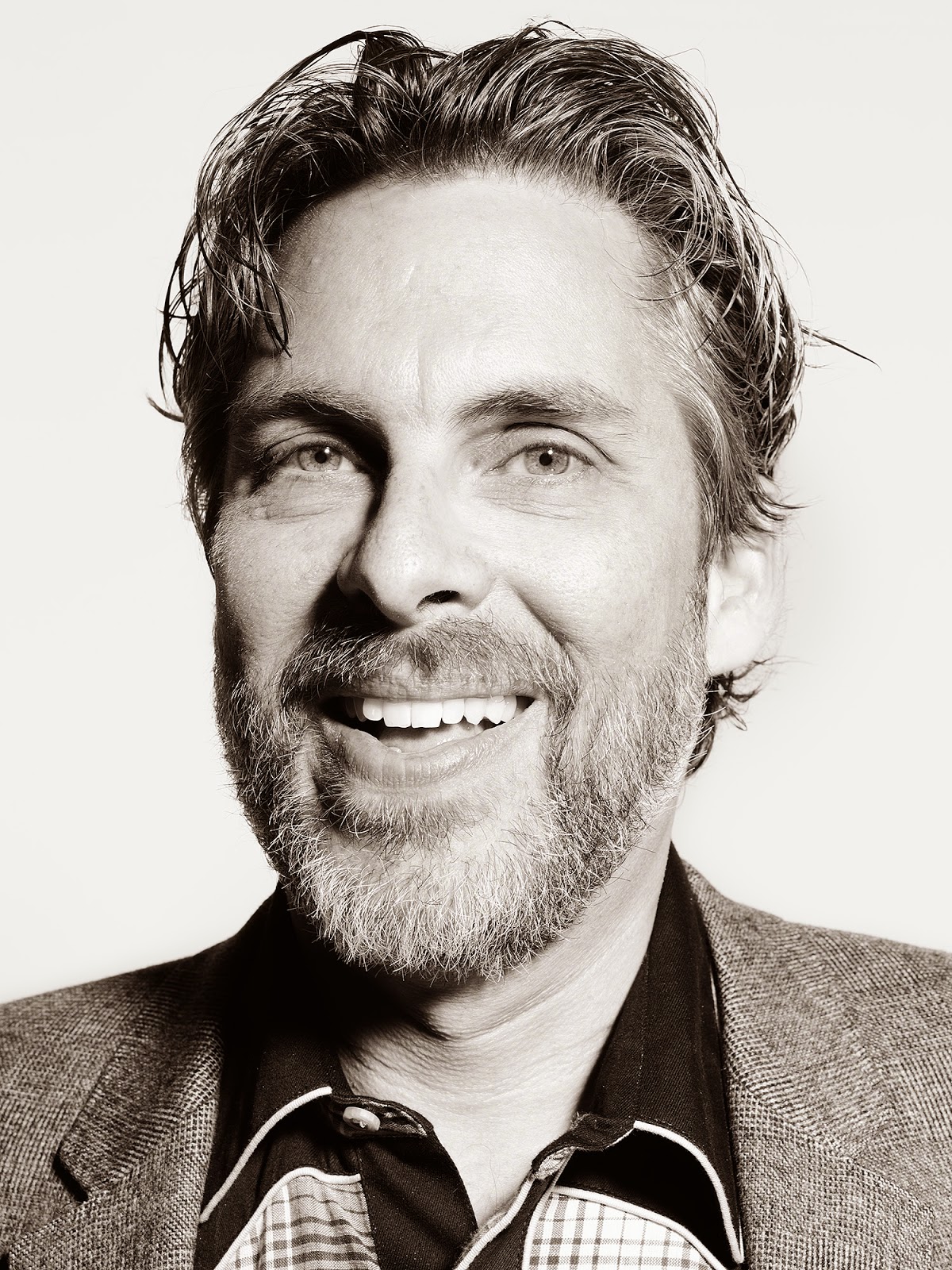
Lee Towndrow is a visual artist based in New York City. He has photographed Lena Dunham, Martin Amis, Dan Brown, Michael Chabon, and Sheila Heti. His work has appeared in Time Magazine, The Paris Review, Das Magazin. He has worked as a visual effects artist on campaigns for General Motors, HONOR NYC, Morgan Stanley, TD Bank.
Towndrow began his career as a designer and photographer at a design firm he founded. The firm was best known for creating the album cover artwork for prominent Canadian bands such as Sloan, The Flashing Lights, The Inbreds and Michelle McAdorey.

From 2004-2005 he lived in Buenos Aires, where he worked with Roberto Jacoby, the m7red center, Raumlabor Berlin Kiwi and Cecilia Sainz and Eugenia Herrera on conceptual art installations, such as Proyecto Venus, Darkroom and ArteBA.


Here is his link:http://leetowndrow.com/fiftythree/?pid=517 Hope you like it.

Bill Viola by Olyvia Behnke

Bill Viola uses video and digital media to address social and personal issues. He focuses on life related to nature. Also stuff like human experiences such as life, death. and aspects of consciousness. He's known as "radically expressive and technically daring."

The artist creates images that are visually compelling for the viewer. I think that is good, to make art for the sake of art sometimes and the video is pretty cool.


Thursday, April 10, 2014

Photographer Dan Marbaix By Sara Moore

My mom actually introduced this photographer to me. His name is Dan Marbaix.  He is known as an "urban explorer."  He travels from city to city, exploring abandoned houses, asylums, churches, state buildings and much, much more.  He has been arrested over 20 times for his trespassing-and even held at gunpoint-but he refuses to give up his search for things that exist out of the mundane.


His work for me is very interesting and I hope you think so too! Below the pictures is a link:


http://www.viralnova.com/urban-explorer/


Here is another link of his work from Mail Online:


http://www.dailymail.co.uk/news/article-2401848/photographer-Daniel-Marbaixs-photos-doctors-deserted-mansion-Germany.html


Tuesday, April 8, 2014

Art Wolfe - Buyun Wang

Art Wolfe (born 1951) is an American photographer and conservationist, best known for color images of wildlife, landscapes and native cultures.His photographs document scenes from every continent and hundreds of locations, and have been noted by environmental advocacy groups for their "stunning" visual impact
Wolfe's career has been described as "multi-faceted", involving wildlife advocacy, art, journalism, and education. According to William Conway, former president of the Wildlife Conservation Society, Wolfe is a "prolific and sensitive recorder of a rapidly vanishing natural world.In the last 30 years, the public has viewed Wolfe's work in more than sixty published books, including Vanishing Act, The High Himalaya, Water: Worlds between Heaven & Earth, Tribes, Rainforests of the World, and The Art of Photographing Nature.


One reason about Art Wolfe is that his is really popular nature photographer and television presenter whose vividly-coloured images of wildlife, landscapes and indigenous cultures celebrate the beauty and diversity of the natural world.
you can fine more on his website. http://www.artwolfe.com/

Thursday, April 3, 2014

Lee Friedlander - Jon Bolli

I got a Friedlander book in the mail the other day so I thought I would share some Friedlander, and some of my favorite pictures of his.

Lee Friedlander, born in 1934, began photographing the American social landscape in 1948. With an ability to organize a vast amount of visual information in dynamic compositions, Friedlander has made humorous and poignant images among the chaos of city life, dense landscape and countless other subjects. Friedlander is also recognized for a group of self-portraits he began in the 1960s, reproduced in Self Portrait, an exploration that he turned to again in the late 1990s, and published in a monograph by Fraenkel Gallery in 2000. Friedlander’s work was included in the highly influential 1967 New Documents exhibition, curated by John Szarkowski at the Museum of Modern Art. Included among the many monographs designed and published by Friedlander himself are Sticks and Stones, Lee Friedlander: Photographs, Letters From the People, Apples and Olives, Cherry Blossom Time in Japan, Family, and At Work. Friedlander was the subject of a major traveling retrospective and catalog organized by the Museum of Modern Art in 2005. In 2010, the Whitney Museum of American Art, New York exhibited the entirety of his body of work, America by Car.


To see more click HERE

Man Ray by Olivia Duval

May Ray was an American artist who was a painted and photographer and most known for his contribution to the Dada and Surrealist movements. He was most famous for his photographs in fashion and portrait photography. In the 1920s and 30s, he was a fashion photographer for Harper's Bazaar, Vu, and Vogue and experimented with using the medium in different methods. One approach was producing images directly from ordinary objects on photosensitive paper that were usually arranged in an arbitrary way. He called this method the "rayograph." He also used the solarization process to some of his work which is a combination of negative and positive images. He spent a lot of his life in Paris and returned there and focused on painting at the end of his life.


Harry Callahan by James Conner

Harry Callahan was a photographer that dabbled in multiple different types of photography.  Bruce told me about this photographer in reference to my medium format class. I am doing a project on layering my negatives with portraits and nature. Callahan took a lot of photos of his wife, most times nude. He would show the body in ways you might not think. He also did some multiple exposures playing with shadows, or the human body. I have known Callahan's work for a couple years but didn't really know who he was.Hes photo is the photo that's on the front of the photo 1 class book.


http://anthonylukephotography.blogspot.com/2011/09/photographer-profile-harry-callahan.html


Thursday, March 27, 2014

Dana Gluckstein by Olyvia Behnke


             I was introduced to this photographer and fell in love with her portraiture. When she was a junior in college she studied in Italy and fell in love with photography and the use of light in her work. Since I am currently in the same place in life I find a personal connection to her work.
                        She discusses Richard Avedon in her curatorial statement:
            Despite their allure and sophistication, modern portraits are in general limited to those superficial aspects of the sitter that can be eloquently lighted, artfully posed, and objectively rendered by the cameras lens. Even one of the finest fashion and portrait photographers, Richard Avedon, admitted, the surface is all youve got.

She goes on to say something is lacking in portraits today, and that is something Ive been struggling with lately. Dana attempts to bring back what is missing through her work.  

Click the link to get to her website Dana Gluckstein

Here is a video slide of her work on Dignity a collection of iconic photographs that honor Indigenous Peoples.   


Sarah Hadley-Photographer by Buyun Wang

Sarah Hadley is born in Boston. Grew up in a magical palace, the Gardner Museum. Wandered away from college in her twenties to Venice, Italy. Had the happiest three months of her life and have been madly in love with that city ever since. Something about the stillness and the dark alleys and the water everywhere sparked her imagination. She begin to taking photos. Then she returned to the states and finished a degree in Art History. Worked at the National Gallery and the Library of Congress. Saw Robert Frank's retrospective and was blown away. Got a degree in photography at the Corcoran College of Art. Shot on the streets of DC and NY and Boston - black and white and gritty photos. Worked for newspapers and magazines. Moved to Chicago. Went to Ragdale, the artists and writers colony in Lake Forest, IL, and discovered the prairie and later was asked to photograph the amazing Howard Van Doren Shaw house for "The Ragdale House Speaks". Returned to Venice and starting shooting "Lost in Venice". Moved to CA in 2009 and live 6 blocks from the Pacific ocean. Love to travel.

I was touched  by those photos because they are talking about memories. How she traveled and how she felt about the city she lives. The photographs in her "lost Venice" series appear to render her memories into mysterious visual scenarios. Her work is introspective, borne of , it seems, personal pain and contemplation.
How do you photograph a memory? Photographer Sarah Hadley, executive director and creator of the Filter Photo Festival in Chicago, may have found just the answer. The photographs in her “Lost Venice” series appear to render her memories into mysterious visual scenarios. Her work is introspective, borne of, it seems, personal pain and contemplation.
“This project is about loss, memory and the mystery of life,” Hadley explains. “I used the sights and symbols of the city of Venice, Italy, as a backdrop as I tried to distill my memories and feelings about my childhood and the loss of my father.”
Hadley continues, “Venice is a haunting, surreal and mysterious place, and one which has a storied past of loss and decay. I wanted my vision to be just that—my personal vision. Photography is a great way to express your emotions and I think the best work comes from deep inside.”
- See more at: http://www.rangefinderonline.com/features/fine-art/Photo-Finish-Sarah--7839.shtml#sthash.PQxwLJIW.dpuf
How do you photograph a memory? Photographer Sarah Hadley, executive director and creator of the Filter Photo Festival in Chicago, may have found just the answer. The photographs in her “Lost Venice” series appear to render her memories into mysterious visual scenarios. Her work is introspective, borne of, it seems, personal pain and contemplation.
“This project is about loss, memory and the mystery of life,” Hadley explains. “I used the sights and symbols of the city of Venice, Italy, as a backdrop as I tried to distill my memories and feelings about my childhood and the loss of my father.”
Hadley continues, “Venice is a haunting, surreal and mysterious place, and one which has a storied past of loss and decay. I wanted my vision to be just that—my personal vision. Photography is a great way to express your emotions and I think the best work comes from deep inside.”
- See more at: http://www.rangefinderonline.com/features/fine-art/Photo-Finish-Sarah--7839.shtml#sthash.PQxwLJIW.dpuf
How do you photograph a memory? Photographer Sarah Hadley, executive director and creator of the Filter Photo Festival in Chicago, may have found just the answer. The photographs in her “Lost Venice” series appear to render her memories into mysterious visual scenarios. Her work is introspective, borne of, it seems, personal pain and contemplation.
“This project is about loss, memory and the mystery of life,” Hadley explains. “I used the sights and symbols of the city of Venice, Italy, as a backdrop as I tried to distill my memories and feelings about my childhood and the loss of my father.”
Hadley continues, “Venice is a haunting, surreal and mysterious place, and one which has a storied past of loss and decay. I wanted my vision to be just that—my personal vision. Photography is a great way to express your emotions and I think the best work comes from deep inside.”
- See more at: http://www.rangefinderonline.com/features/fine-art/Photo-Finish-Sarah--7839.shtml#sthash.PQxwLJIW.dpuf
How do you photograph a memory? Photographer Sarah Hadley, executive director and creator of the Filter Photo Festival in Chicago, may have found just the answer. The photographs in her “Lost Venice” series appear to render her memories into mysterious visual scenarios. Her work is introspective, borne of, it seems, personal pain and contemplation.
“This project is about loss, memory and the mystery of life,” Hadley explains. “I used the sights and symbols of the city of Venice, Italy, as a backdrop as I tried to distill my memories and feelings about my childhood and the loss of my father.”
Hadley continues, “Venice is a haunting, surreal and mysterious place, and one which has a storied past of loss and decay. I wanted my vision to be just that—my personal vision. Photography is a great way to express your emotions and I think the best work comes from deep inside.”
- See more at: http://www.rangefinderonline.com/features/fine-art/Photo-Finish-Sarah--7839.shtml#sthash.PQxwLJIW.dpuf


You can learn more about her and her work on this website:  

Ralph Eugene Meatyard by James

    Ralph Eugene Meatyard was born in Normal, Ill. in 1925, perhaps dooming him from the start. Sure, the father and photographer was the president of the PTA and Little League, but he also took pictures of his children in abandoned mansions wearing weird masks. Meatyard, trained as an optician, held a long-time interest in visual perception. This, combined with a college degree in philosophy and his self-described Zen influence, led to a desire to examine the otherworldly. The photographer, who hung dearly to his amateur status, went on road trips with his family, pulling over at abandoned farmhouses and ominous, decrepit mansions along the way. Placing grotesque masks on his children and setting them free, Meatyard captured an un-choreographed mix of childhood innocence amid strange and horror-filled backdrops. They evoke the dark unknown histories lurking in "normal" America.
    I was introduced to Meatyard's Photos last semester in photo history. His work has slowly grown on me. At first the photos appear as almost a collection of horror images. What I enjoy about his photos are that the masks that he uses on his children, it makes there heads look over-sized and brings a funny aspect to his photos. Also his use of movement in a few of his photos is well executed. He has became one of my favorite photographers.


 Here is a link to an article that talks about his photography

http://www.smithsonianmag.com/arts-culture/ralph-eugene-meatyard-the-man-behind-the-masks-106625198/?no-ist